
Voting Rights

Voting is the cornerstone of our democracy and the fundamental right upon which all our civil liberties rest.
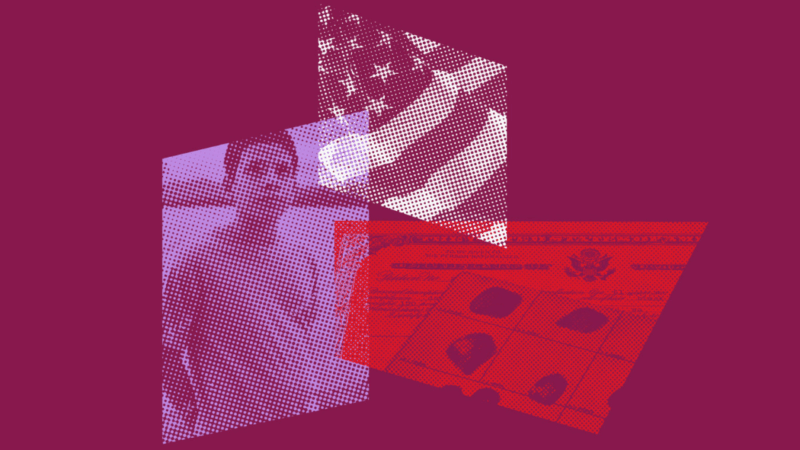
Image of a person looking into the camera with collage images of the American Flag and a ballot to the right of the person.

Through litigation and advocacy, the ACLU is working to protect and expand access to the ballot, while fighting back against attempts to curtail an essential right in our democracy.

In 2014, then-Governor Patrick signed into law a set of important ACLU-backed measures, including early voting, online voter registration, pre-registration for 16-year-olds, and post-election audits to ensure every vote is properly counted.

The ACLU of Massachusetts also advocated for automatic voter registration, which passed in 2018. Automatic voter registration breaks down barriers to voting by automatically registering eligible Massachusetts residents through the Registry of Motor Vehicles and MassHealth. By modernizing how our voter registration system works, more eligible Massachusetts voters now have the opportunity to engage in the democratic process.

Despite these reforms, the fight for voting rights remains as critical as ever.

The 2020 election saw the highest levels of voter participation in US history, but the assault on the Capitol that followed was a reminder of just how fragile our democratic institutions really are. We are committed to shoring those institutions up.

On election days, the ACLU monitors polling sites for voter challenges and intimidation, and we provide voter registration information throughout the year. During the 2020 election, we trained and deployed hundreds of poll monitors for this purpose.

In 2022, the ACLU helped win passage of the VOTES Act. This law reflects the greatest expansion of voting rights in years, enshrining policies like universal mail-in ballots for all future state elections.

In 2023, the ACLU launched BIPOC to the Ballot Box, a non-partisan public education campaign aimed at building voter awareness and engagement in municipalities with large or growing Black, Indigenous and People of Color (BIPOC) communities. Campaign canvassers knocked on over 2,500 doors to get out the vote for the 2023 municipal elections.

Voting rights depend on the principle of “one person, one vote,” which in turn depends on fairly drawn districts, empowering communities to elect people who truly represent their wishes. In Massachusetts and around the country, the ACLU will continue to defend this principle.

Visit the Secretary of the Commonwealth’s website to register to vote, find your polling location, learn about your ballot, and more.

The Latest
Resource
Placeholder image

BIPOC to the Ballot Box

Press Release
Placeholder image

Voting Rights Groups Challenge Executive Order on Mail-In Ballots as Illegal Interference in Elections

President Trump’s unlawful executive order would take control of mail-in ballots from the states and create an unvalidated, error-prone system that would risk disenfranchising eligible voters.
Issue Areas: Voting Rights
Press Release
Placeholder image

ACLU Asks Court to Reject Trump Administration’s Unlawful Demand for Full Access to Massachusetts Voter Rolls

Demand is part of an unprecedented attempted nationwide data grab that could allow the administration to illegally target and disenfranchise legitimate voters
Issue Areas: Voting Rights
Resource
Placeholder image

Home

Court Case
Apr 02, 2026

League of Women Voters of Massachusetts v. Trump

On March 31, 2026, President Trump issued a sweeping Executive Order titled "Ensuring Citizen Verification and Integrity in Federal Elections," seeking once again to seize control of election administration from Congress and the states. The Order directs the Department of Homeland Security to compile lists of citizens from federal databases — including Social Security Administration records and immigration data — and transmit those lists to states before every federal election. It then directs USPS to refuse to deliver mail-in or absentee ballots from any voter who does not appear on a federally created enrollment list. It also threatens states with non-delivery of their voters' ballots unless those states submit lists of eligible mail voters to USPS at least 60 days before each election. If implemented, the Order would threaten the ability of millions of eligible citizens to cast their ballots, particularly military members, overseas citizens, the elderly, recently naturalized citizens, and voters with disabilities who rely on mail voting. The Constitution gives Congress and the states — not the President — the power to regulate elections. Despite this, President Trump's March 31, 2026 Executive Order attempts to impose a sweeping new federal regime over mail-in and absentee voting nationwide. This Executive Order is President Trump's second attempt to seize control of federal elections by executive fiat, issued despite injunctions from three separate federal courts blocking a previous 2025 Executive Order on similar grounds. Plaintiffs in this case bring six claims: the Order violates the constitutional separation of powers; it is ultra vires because it commandeers USPS in violation of Congress's postal statutes; it violates the Tenth Amendment and principles of federalism by coercing states to alter their election laws; it unconstitutionally burdens the right to vote; it violates Section 11(a) of the Voting Rights Act by directing USPS to refuse to deliver lawful ballots to eligible voters; and it violates the Privacy Act by requiring the rushed, non-consensual compilation and dissemination of inaccurate personal data about millions of Americans without the required public notice and comment.
Court Case
Feb 10, 2026

United States v. Galvin

In December 2025, the ACLU of Massachusetts and the ACLU Voting Rights Project filed a motion to intervene on behalf of Common Cause, Jane Doe Inc., and a Massachusetts voter in United States of America v. Galvin to prevent the U.S. Department of Justice from obtaining Massachusetts voters’ personal data. In July 2025, the DOJ asked Massachusetts to turn over voters’ full names, dates of birth, addresses, driver’s license numbers, and partial Social Security numbers — highly sensitive data protected under state and federal law. Massachusetts Secretary of the Commonwealth William F. Galvin appropriately declined to share this sensitive data. The United States then filed this lawsuit — one of at least twenty-five nearly identical actions the DOJ has initiated against states and election officials — seeking to compel the production of sensitive Massachusetts voter data. According to extensive public reporting, corroborated by government documents, the DOJ’s requests for private, sensitive voter data from Massachusetts and other states appear to be in connection with novel efforts to construct a national voter database, and to otherwise use untested forms of database analysis to scrutinize state voter rolls and challenge voters’ eligibility. In their motion to intervene, the parties argue that the DOJ’s request threatens voter privacy and could enable voter disenfranchisement. The parties’ motion to intervene was allowed on January 6, 2026. On behalf of the intervenors, the ACLU has since filed a motion to dismiss the DOJ’s complaint. The intervenors argue that the United States seeks to compel disclosure of sensitive voter information to which it is not entitled. Neither the information requests propounded by the DOJ, nor the complaint itself provide the “basis and the purpose” for the DOJ’s requests as required under the Civil Rights Act of 1960, under which the DOJ brings suit. The intervenors argue that the DOJ is grossly misusing civil rights era statutes to reach discriminatory and illegal ends. Additionally, the intervenors argue that the DOJ’s stated reason for requesting millions of Massachusetts voters’ personal data is pretextual. Public reporting and publicly available government documents confirm that the United States’s actual purpose is not to ensure compliance with federal statute, but to compile an unprecedented national voter file using error-prone forms of data-aggregation and then to use this tool to identify and mass-challenge ostensibly ineligible voters. Common Cause, an intervenor in the case, is a nonpartisan, grassroots organization dedicated to upholding the core values of American democracy. Jane Doe Inc. is a coalition of organizations dedicated to advocating on behalf of survivors of sexual and domestic violence. The group has an interest in protecting the privacy of survivors. Juan Pablo Jaramillo, a naturalized U.S. citizen, is also represented in the case. Jaramillo has an interest because his status as a naturalized citizen may place him at a heightened risk of being targeted for voter disenfranchisement, a threat that extends to countless other Massachusetts voters.
Court Case
Nov 02, 2016

Chelsea Collaborative v. Galvin

Arbitrary deadlines should not keep anyone from exercising their constitutional right to vote.