Today, anyone born on U.S. soil receives U.S. citizenship (with rare exceptions, such as the children of foreign diplomats). But this wasn’t always the case.
At our nation’s founding, the Constitution didn’t guarantee citizenship to everyone born on U.S. soil. The question of who counted as a citizen was disputed and often racially motivated. That changed with the ratification of the 14th Amendment and a Supreme Court ruling in 1898.
In one of the first acts of his second term, President Trump sought to erase birthright citizenship through an executive order. The ACLU sued, and the case is now pending before the Supreme Court.
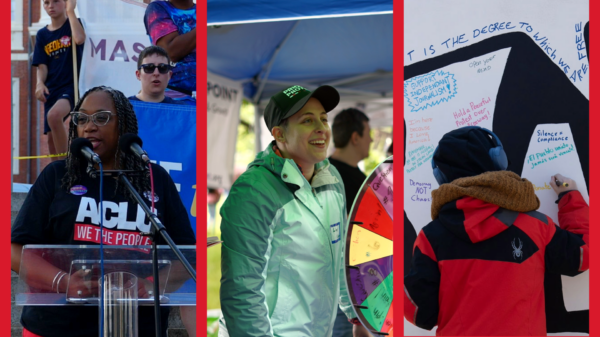
We sat down with Traci Griffith, director of the Racial Justice Program at the ACLU of Massachusetts, to explore why birthright citizenship is an essential keystone to a multi-racial democracy — and how attacks on the principle are further eroding racial justice in the United States.
From a racial justice lens, why is birthright citizenship so important?
TG: Birthright citizenship matters for racial justice because it’s one of the strongest legal tools we have to prevent the United States from having a caste system.
In a caste system, people are treated as “less than” from birth based on their parents’ legal status, race, ethnicity, or national origin.
Birthright citizenship creates a clear rule that promotes equality: If you’re born here, you belong here. You are due the same basic rights and protections as everyone else.
That consistency is especially important for families of color who have historically been targeted by exclusionary policies and selective definitions of who counts as “American.”
Without birthright citizenship, it becomes easier to manufacture a permanent underclass. People could be born and raised in this country but locked out of full rights and opportunity. History shows that kind of tiered belonging becomes a pipeline for discrimination and political scapegoating.
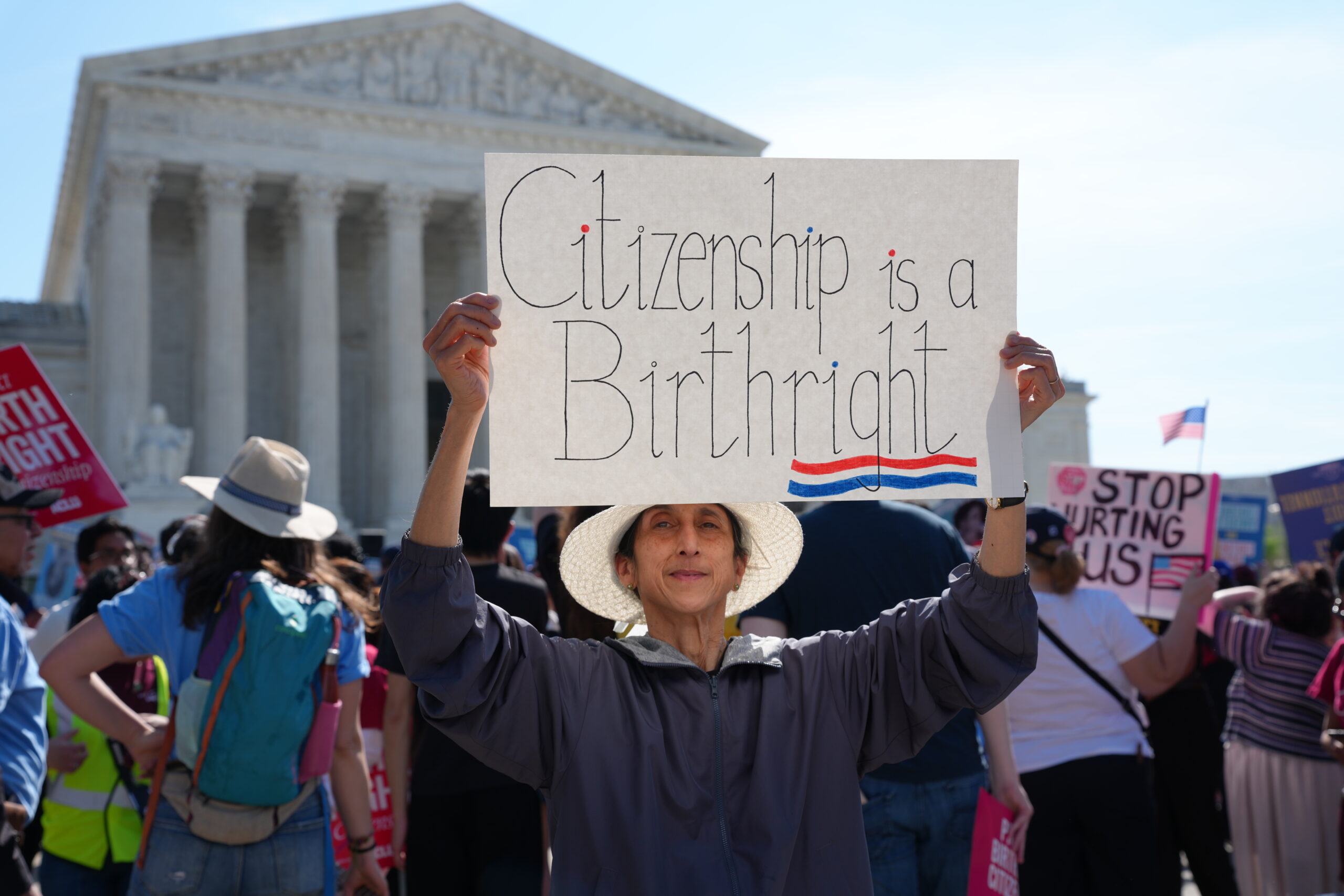
So, was the 14th Amendment written with immigrant families in mind?
TG: The 14th Amendment was written in the aftermath of the Civil War to overturn Dred Scott and make absolutely clear that formerly enslaved people, and their children, were citizens!
But the language Congress chose is intentionally broad: it applies to “all persons” born in the United States and “subject to the jurisdiction thereof.” In other words, it secured citizenship for Black Americans while also embracing a general rule of birthright citizenship that covers immigrant families, too.
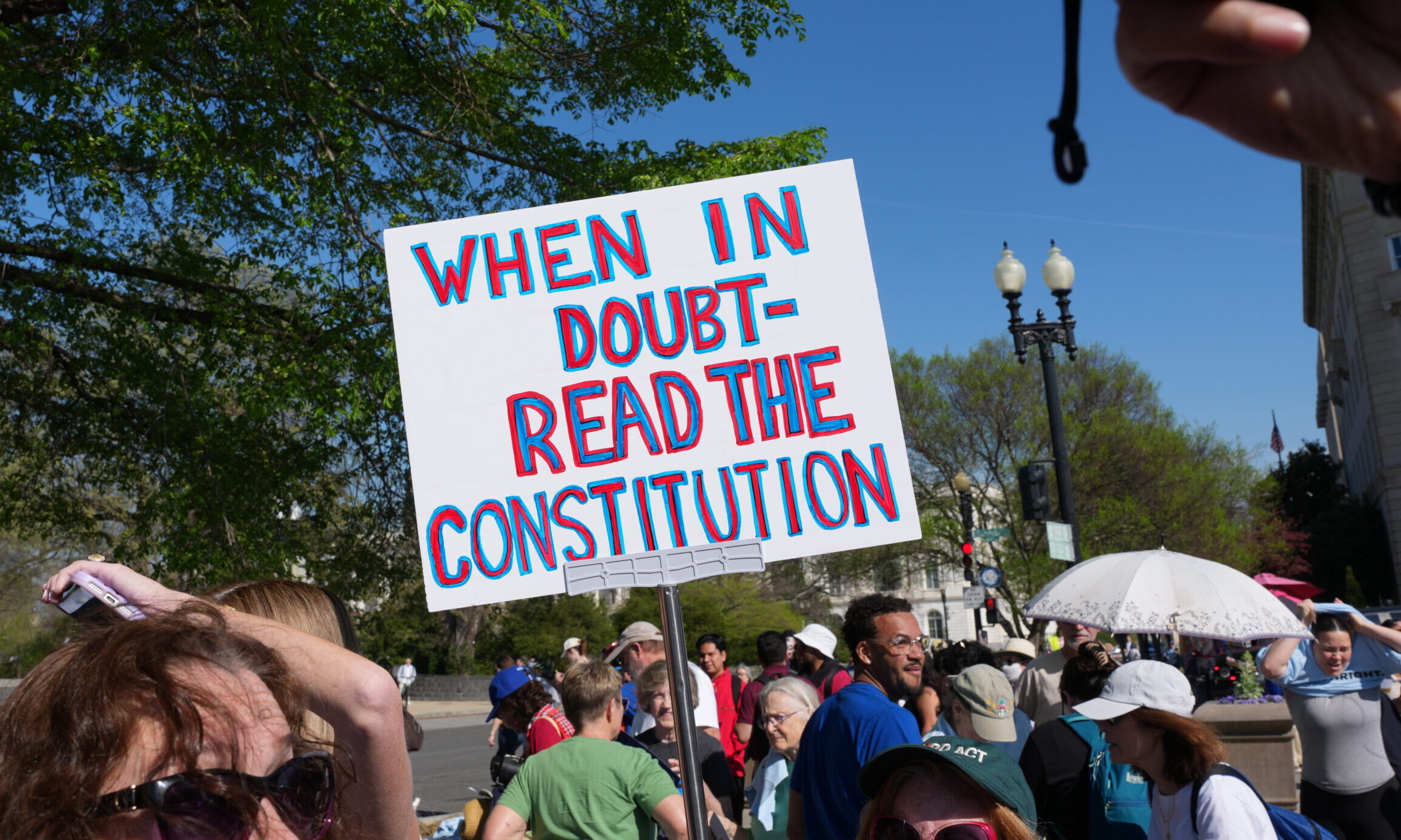
What are the risks of denying birthright citizenship?
TG: If we deny birthright citizenship, we replace the bright-line rule defining citizenship — birth on U.S. soil — with a system that decides who belongs based on parentage, paperwork, and political headwinds. That creates immediate chaos for families, but the deeper harm is structural.
Without birthright citizenship, the door is opened to unequal, racialized enforcement and to the creation of a permanent class of people born in the U.S. who can be treated as deportable, stateless, or without rights altogether.
History shows that once citizenship becomes conditional for some, it’s rarely applied evenly. History has also taught us that communities of color are the first to pay the price.
On April 1, 2026, the Supreme Court heard arguments in Barbara v. Trump, a case challenging the right to birthright citizenship. This ACLU case stemmed from President Trump’s executive order restricting birthright citizenship for a broad category of people, including the children of undocumented parents. In your view, how did we arrive at this moment?
TG: It’s important to understand that this isn’t coming out of nowhere. From the start, birthright citizenship has been a direct challenge to a racialized idea of belonging — the idea being that “real Americans” are white and defined by ancestry, not by equal membership under law.
The 14th Amendment was designed to reject that worldview after Dred Scott, but Reconstruction’s promise was met almost immediately by backlash, and that backlash has repeatedly resurfaced in periods of economic anxiety, political scapegoating, and rising nativism. A period such as this.
Why now? Because attacks on immigrant communities of color have become a central political strategy of the current administration. This moment also reflects a broader push to use executive power and administrative gatekeeping — passports, Social Security numbers, vital records — to create a two-tier system of belonging without going through the constitutional process of amending the 14th Amendment.
Once the government can pick and choose which U.S.-born children it will recognize as citizens, it won’t stop at the most vulnerable families.
Birthright citizenship is the keystone that makes multi-racial democracy possible in an era of migration. That’s why the ACLU is fighting so hard to preserve it.
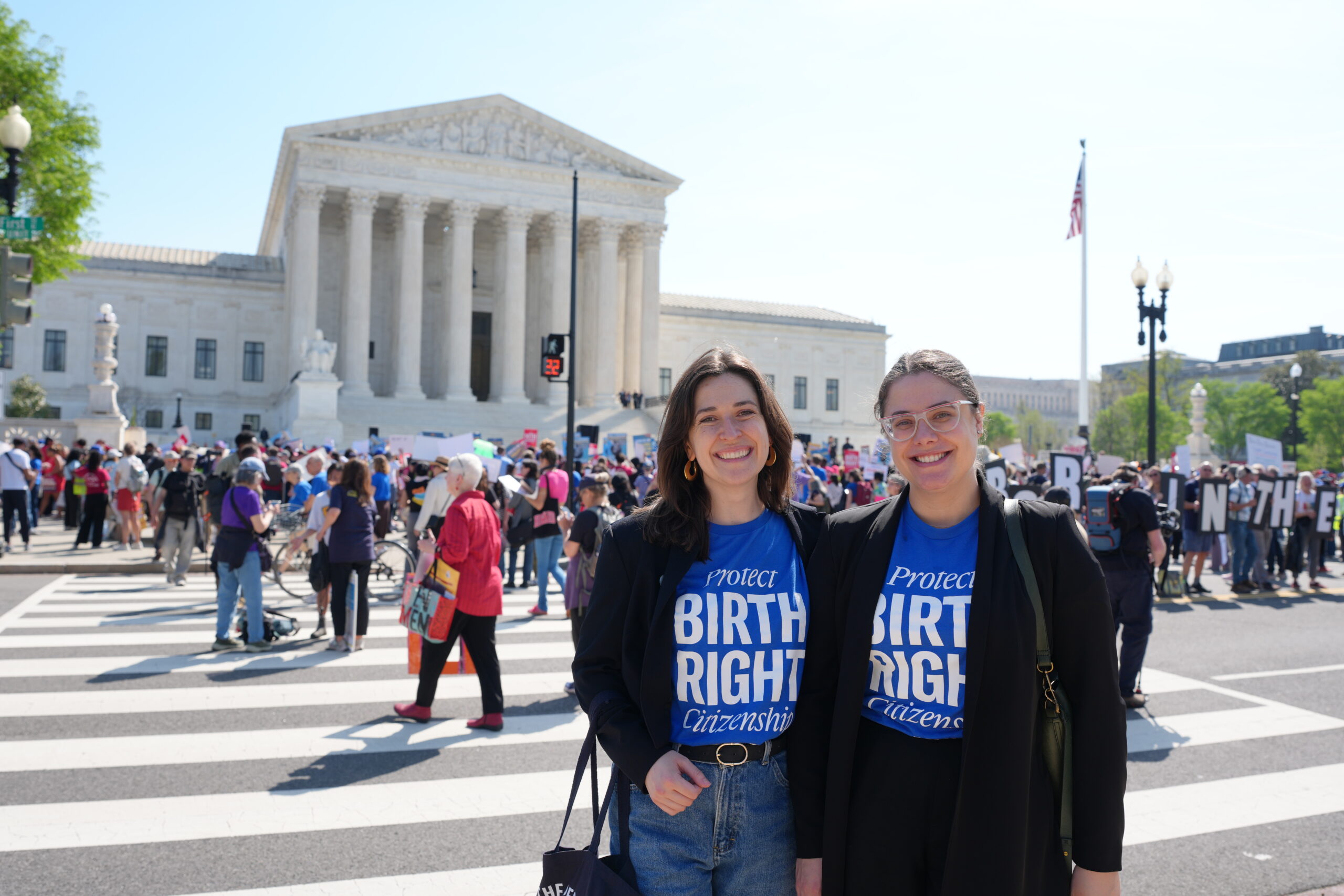
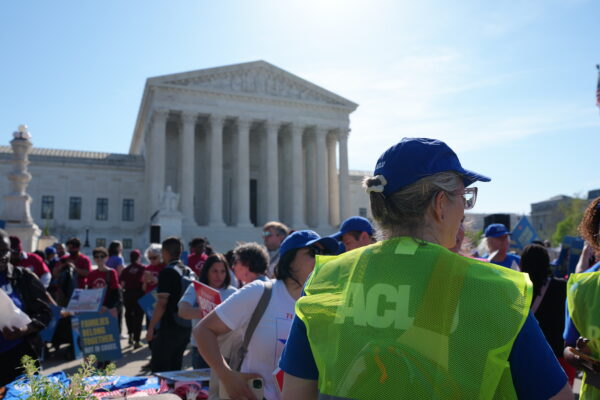
ACLU of Massachusetts legal fellows outside the Supreme Court of the United States during oral arguments in Barbara v. Trump on April 1, 2026.
What can we learn from previous disputes over birthright?
TG: The record shows that progress isn’t completely linear. Cases like Dred Scott and Wong Kim Ark illustrate how BIPOC people and immigrants spent decades fighting for birthright citizenship. But these fights weren’t always successful.
As an example of non-linear progress, Native Americans were not granted eligibility for birthright citizenship — or even considered — in the celebrated 1898 Wong Kim Ark case! It wouldn’t be until 1924, 26 years later, that Native Americans would be considered eligible for U.S. citizenship through the Synder Act, also known as the Indian Citizenship Act.
So, it’s essential to keep speaking out for everybody’s rights. As long as we do, change is possible.
What are some concrete actions individuals can take to fight for racial justice during a time when the federal government is deliberately trying to disenfranchise BIPOC immigrant families?
TG: There are so many things you can do! Here is a list of actions you can take:
Are there new ways you’d like to see racial justice advocacy expand in the coming years?
TG: Absolutely! Environmental justice is a racial justice issue. Amidst dire sociopolitical conditions, there are various communities in Massachusetts that have been harmed by environmental (in)justice.
Just last month, the American Lung Association reported that over 170,000 children across the state were breathing in unhealthy levels of air pollutants. As we know, environmental (in)justice tends to harm our most vulnerable populations: BIPOC folks and lower income communities, who are often immigrants.
According to a 2018 report, Black Americans are 1.5 times more likely than other populations to be diagnosed with asthma. The poor quality of air across the Commonwealth puts our youngest group at the most risk for not only developing asthma but also developing heath issues earlier in their lives.
Furthermore, there is reason to believe climate migration from the global south will become increasingly common in the coming years, adding another layer to the overlap between birthright, racial justice, and climate. And displacement due to natural disasters will continue to impact people in this country too, from wildfires to hurricanes. This is a human issue that impacts all of us, just like racial justice. We cannot give up the fight!
For updates on the Supreme Court birthright citizenship case, please visit the Barbara v. Trump case page.