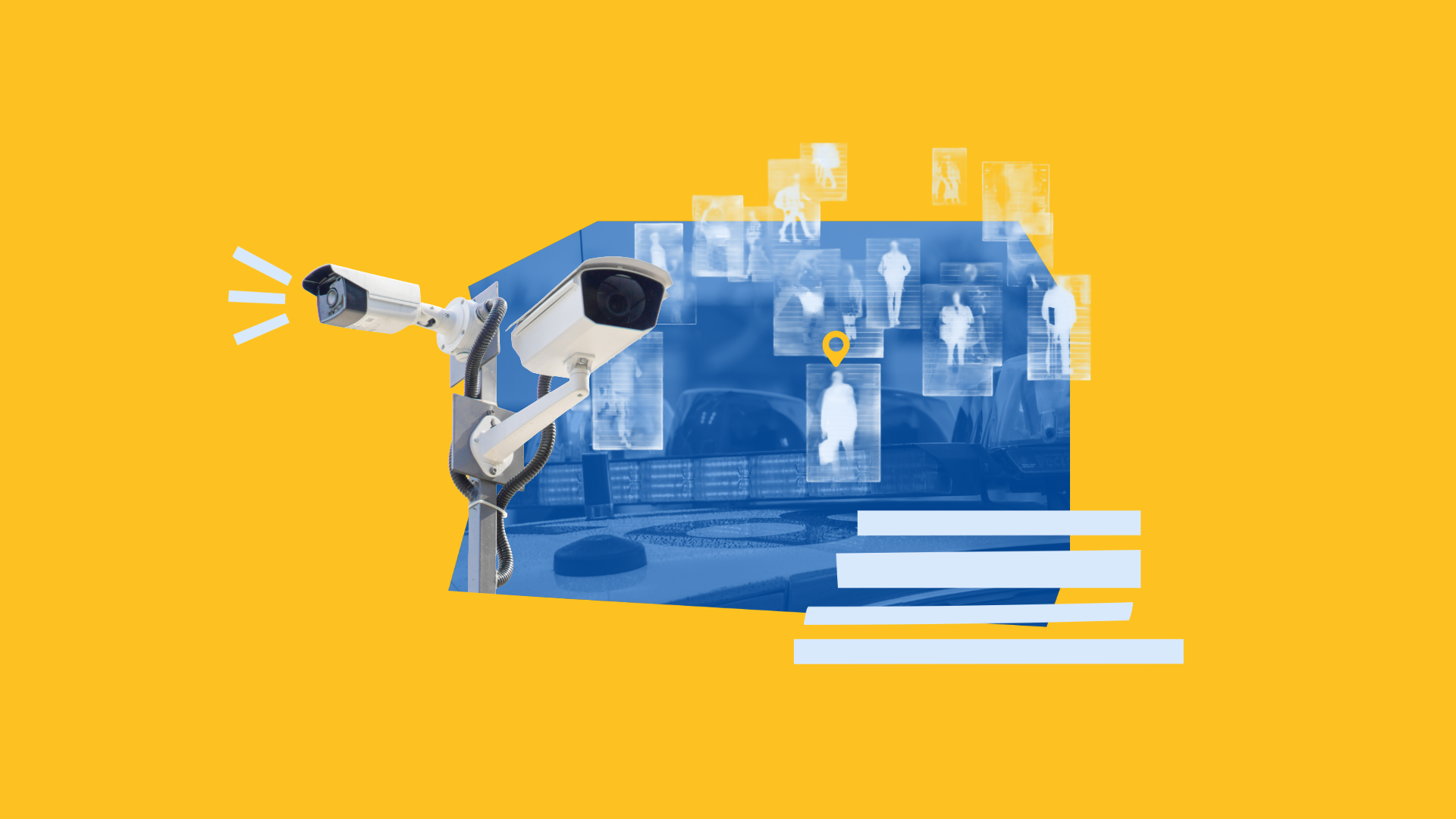
Yellow background collage graphics with various blue technology images including a camera, location pin, facial recognition software and light blue lines.

Surveillance Discovery Project

The model motions are available through a password-protected resource page accessible to verified criminal defense attorneys.

To request access, email techmotions@aclum.org with information verifying your work as a criminal defense attorney.

Request access

Last updated on July 19, 2026

Model motions to help criminal defense attorneys identify and preserve information on police use of surveillance technology

Surveillance technology creates and perpetuates injustices across our legal system.

We have created a practical toolkit to help level the playing field for criminal defense attorneys and the clients they represent. This toolkit contains model motions that defense attorneys can adapt and use to request information about law enforcement's use of digital surveillance technologies, ranging from facial recognition to license plate readers to other forms of location tracking tech.

Thank you to our partners at the Harvard Law School Race & Law Clinic, who helped with drafting the model motions for this project.


Why should criminal defense lawyers seek to learn if surveillance tech was used on their clients?

Law enforcement agencies in Massachusetts and across the country increasingly rely on powerful digital surveillance technologies to investigate crimes and identify suspects. Facial recognition, license plate readers, gunshot detection systems, cell-site simulators, social media monitoring—these tools are now routine. But their use by law enforcement is often not disclosed, even to criminal defendants and their attorneys.

This practical litigation toolkit contains a library of model discovery and preservation motions, grounded in constitutional law, that criminal defense attorneys can adapt for cases involving various digital surveillance technologies.

The model motions are designed to surface what happened before a defense attorney takes on a new client’s case to ensure that defendants have a meaningful opportunity to challenge evidence derived from technologies with documented error rates, questionable evidentiary reliability, racial disparities, or constitutional vulnerabilities.

The toolkit contains both model motions that compel disclosure of how various surveillance technologies were used in a case, and that put the government or third-party surveillance technology vendors on notice that surveillance data must be preserved for litigation—before potentially exculpatory information or data is deleted.

Why does it matter if digital surveillance technologies are used?

Digital surveillance technologies are woven into nearly all modern criminal investigations, but prosecutors often fail to voluntarily disclose their use. For example, in many cases what looks like an eyewitness identification in a police report is actually the downstream result of a facial recognition search—a technology with documented error rates and known disparities in accuracy across race, sex, and age.

We know that surveillance technology is creating and perpetuating injustices across our criminal legal system.

Over a dozen documented cases of wrongful arrest in the United States have been linked to erroneous facial recognition matches. The National Institute of Standards and Technology has found that many facial recognition algorithms exhibit significantly higher false positive rates for Black faces.

Data related to gunshot detection tools show the technology is both unreliable and concentrated in Black and Latino neighborhoods. Predictive policing tools have come under scrutiny for encoding and replicating historical discriminatory enforcement patterns.

Police use of these and other technologies raises discrimination and accuracy concerns. Law enforcement may also be using them in ways that violate our constitutional rights to privacy or due process.

Despite this record, defendants are routinely prosecuted without ever learning whether or how surveillance technology was used against them. These model motions are designed to help change that—one case at a time.

How defense attorneys can access the toolkit

The model motions are available through a password-protected resource page accessible to verified criminal defense attorneys.

To request access, email techmotions@aclum.org with information verifying your work as a criminal defense attorney.

Attention:

These model motions are designed for the exclusive use of criminal defense counsel only as an informative tool. Model motions are not finalized documents for filing and do not constitute legal advice. The ACLU of Massachusetts' provision of these model motions is not an agreement to represent any individual or entity in a legal proceeding or to serve as co-counsel with any criminal defense attorney. Nothing in these materials creates an attorney-client relationship.

The ACLU of Massachusetts may not regularly update these models. Counsel who use these model motions retain all ethical, legal, and professional responsibilities related to representation of their clients and candor to the court, including but not limited to responsibility to confirm and update citations. Attorneys should conduct their own research and exercise independent professional judgment in applying any of these materials to specific cases. These documents contain placeholders for potential edits pertaining to individual facts that must be edited if the document is used to draft a motion for filing.

Related Content


News & Commentary
Jul 19, 2026
Collage of technology including a street camper, laptop, location pins and a blue decorative geometric shape.
  • Privacy and Surveillance|
  • +1 Issue

Defendants should know when digital surveillance technology has been used to build the case against them. This toolkit will help their lawyers find out.

A toolkit to help defense attorneys defend their clients with expanding surveillance technology and protect our constitutional rights to privacy and due process.
Campaign
Jun 2019
Press Pause on Face Surveillance
  • Privacy and Surveillance

Press Pause on Face Surveillance

Face surveillance gives the government unprecedented power to track our every move. We have a plan.
Initiative
Jul 2026
Automatic License plate readers above a highway in daylight. Location pins demonstrate tracking of vehicles in the background.
  • Privacy and Surveillance

Get The FLOCK Out: Community Advocacy Toolkit

With Flock Safety's license plate reader (LPR) technology, law enforcement agencies across the country can track Massachusetts drivers in real-time — without a warrant, probable cause, or even reasonable suspicion of wrongdoing. Flock's nationwide data sharing model puts our civil rights and civil liberties at risk. Use our toolkit and conversation guide to advocate for change in your community, and check out ACLU's national resource guide for additional information.
Campaign
Jul 2026
Red location data pins on a black background
  • Privacy and Surveillance|
  • +3 Issues

Data Privacy Now!

Today, technology has far outpaced privacy law. Data brokers and Big Tech are free to do almost anything they want with our personal information, including selling our cellphone location data on the open market. These practices endanger all of us, but especially vulnerable communities like immigrants, protesters, and people seeking and providing reproductive and gender-affirming healthcare. Lawmakers must pass the Massachusetts Consumer Data Privacy Act (H.4746) to give all Massachusetts residents robust privacy rights in the digital age.