At a time when Black accomplishments are being erased and our history is being silenced as part of the Trump administration’s campaign of lies and censorship, it is imperative that we remember our full history — and use that knowledge to keep fighting for civil rights.
This year, the United States turns 250 years old. As part of the administration’s “Freedom 250” campaign celebrating our country’s founding, federally funded museums and parks are being forced to erase accurate depictions of slavery. There is also a relentless effort to remove Black-authored books from libraries, race-conscious subjects from curricula, and any mention of racism from our collective history.
250 years of freedom — for whom?
The real history
There is no question that racial injustice is woven into the complex fabric of our nation, from colonizers’ genocide of indigenous Americans to the abuse and enslavement of Black people. Erasing this history does not make the U.S. more worthy of celebration. Instead, it reinforces ignorance and implies that this freedom is only meant for a select few.
This Black History Month, let’s remember that historical erasure and disempowerment are not new strategies. But they can be effective strategies — if we don’t fight back.
When slavery was still legal, U.S. legislators passed anti-literacy laws that forbade enslaved African Americans from learning to read and write. The impact was devastating: their personal stories went unwritten, and their access to knowledge was deliberately cut off. These laws were designed not only to thwart rebellion and escape, but also to leave African Americans extremely vulnerable in their daily lives by preventing them from recording and sharing precious generational knowledge.
Once slavery ended, there were limited historical records of the African American experience readily available to the public. Enter Carter G. Woodson, a historian who understood the importance of documentation and education. In 1926, Woodson established Negro History Week, sharing educational materials that highlighted the oft-overlooked history of Black people in America. People wanted to learn the whole truth — the history that schools and the government would not teach. This commemorative week resonated so deeply that it eventually expanded into Black History Month in 1976.
Black History Month was founded not merely to honor African American contributions to this country. It was founded to educate the public about the full truth of our shared history — and to encourage action rooted in that truth.
Barriers to voting persist
Nothing illustrates the connection between history and action more clearly than the fight for voting rights. That’s why, this year, the ACLU of Massachusetts’ Racial Justice Program is especially celebrating the right to vote, a right hard-won by African Americans. We are reflecting deeply on what these fundamental rights mean for us today, both in Massachusetts and at the federal level.
Voting rights have always been the cornerstone of democracy. Yet even after slavery ended, the Black vote was not won overnight. The fight for the vote was a journey of profound struggle and exceptional achievement. Even after the Fourteenth and Fifteenth Amendments to the U.S. Constitution were passed — monumental victories in the fight for racial equality and voting rights — African American voters still faced serious obstacles to participating in the democratic process. Jim Crow laws, Klan intimidation, and discriminatory literacy tests remained barriers to the ballot box — barriers that echo down the generations to today.
Voting rights advocates condemned these discriminatory barriers, advocating for greater legal protections to ensure people of all races had equal access to the ballot box. In the wake of Bloody Sunday and the historic march across the Edmund Pettus Bridge in Selma, Alabama, President Lyndon B. Johnson signed the Voting Rights Act of 1965, explicitly forbidding racial discrimination in the democratic process of voting. This was yet another exceptional achievement in the fight for racial justice.
And yet, despite these hard-fought protections, barriers to voting and low voter turnout persist across Massachusetts’ Black and Brown communities.
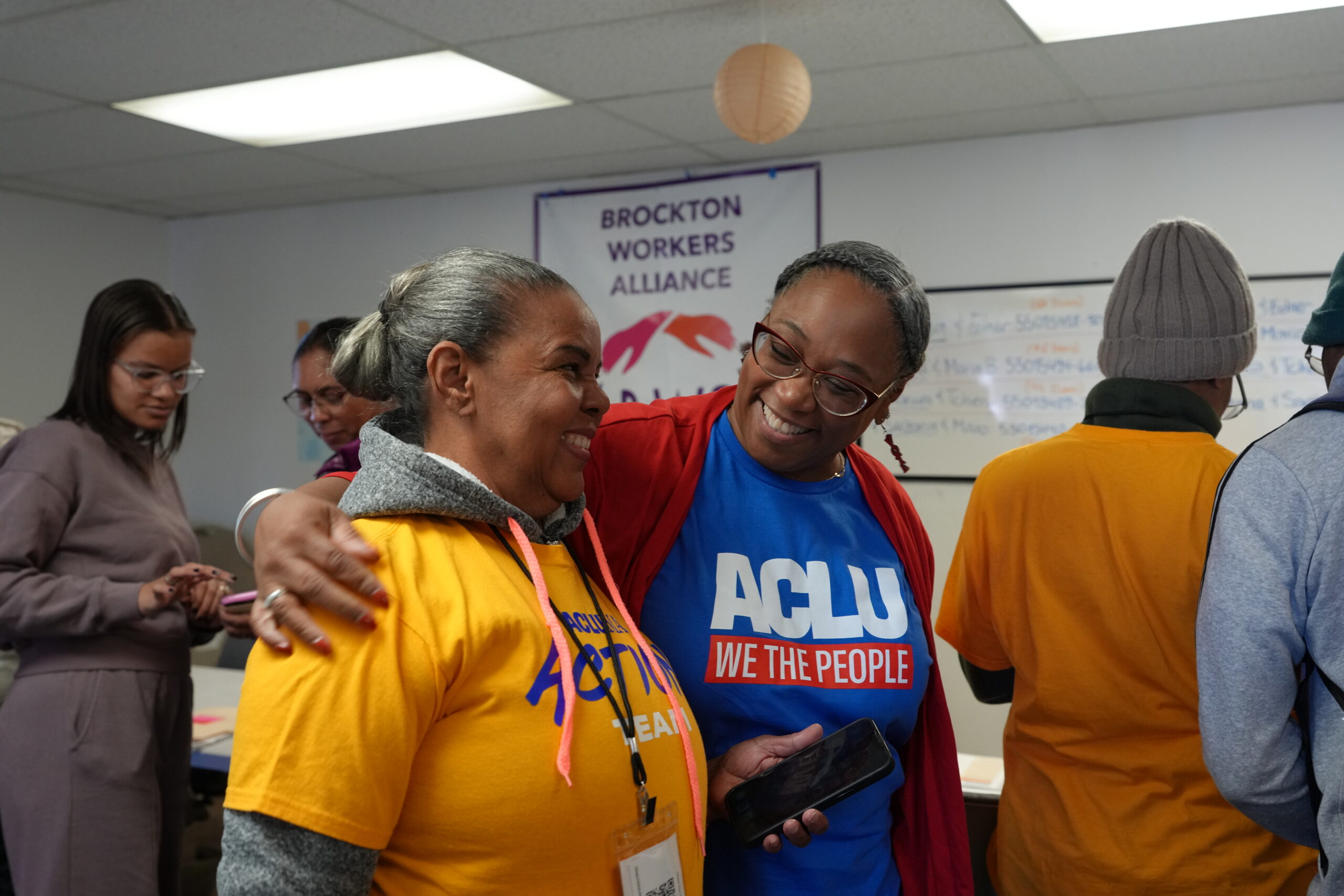
In response to the noticeably low voter turnout in Massachusetts’ communities of color, our Racial Justice and Field Programs launched the BIPOC to the Ballot Box campaign (or “B2BB”) in 2023. Our goal: to educate and empower BIPOC community members to get out the vote.
In our efforts to expand voting rights, we have noticed several persistent barriers keeping otherwise eligible voters from casting ballots. These barriers include: the inactive voter registration list, a limited voter registration window, and challenges to accessibility at polling locations.
The state’s practice of linking the census with the active voter list has an especially serious impact on voting. Households across the Commonwealth receive municipal census forms (also known as the “annual street list”) every two years, typically in the first few months of the year. If you don’t fill it out, you may find yourself removed from the active voter list. You can still vote in your first year of inactivity if you can show a valid ID with your current street address and fill out a form attesting that you remain a resident. But that extra hurdle deters some voters. And if you fail to vote in two consecutive state elections, you will be placed on the inactive voter list.
According to election data from August 2025, Brockton has marked more than 44,000 voters as “inactive,” and this inactivity can be at least in part attributed to voters not filling out the census. That's a whopping 64% of Brockton’s 68,612 registered voters who have been removed from the rolls!
And last September, Lawrence’s City Council voted to remove the mail-in ballot option for voters, just over a month before the November 4 municipal election. That made voting much less convenient for many residents.
These examples illustrate that when we aren’t vigilant, voting access can slip away — and with it, the people’s power.
Voter education can boost turnout
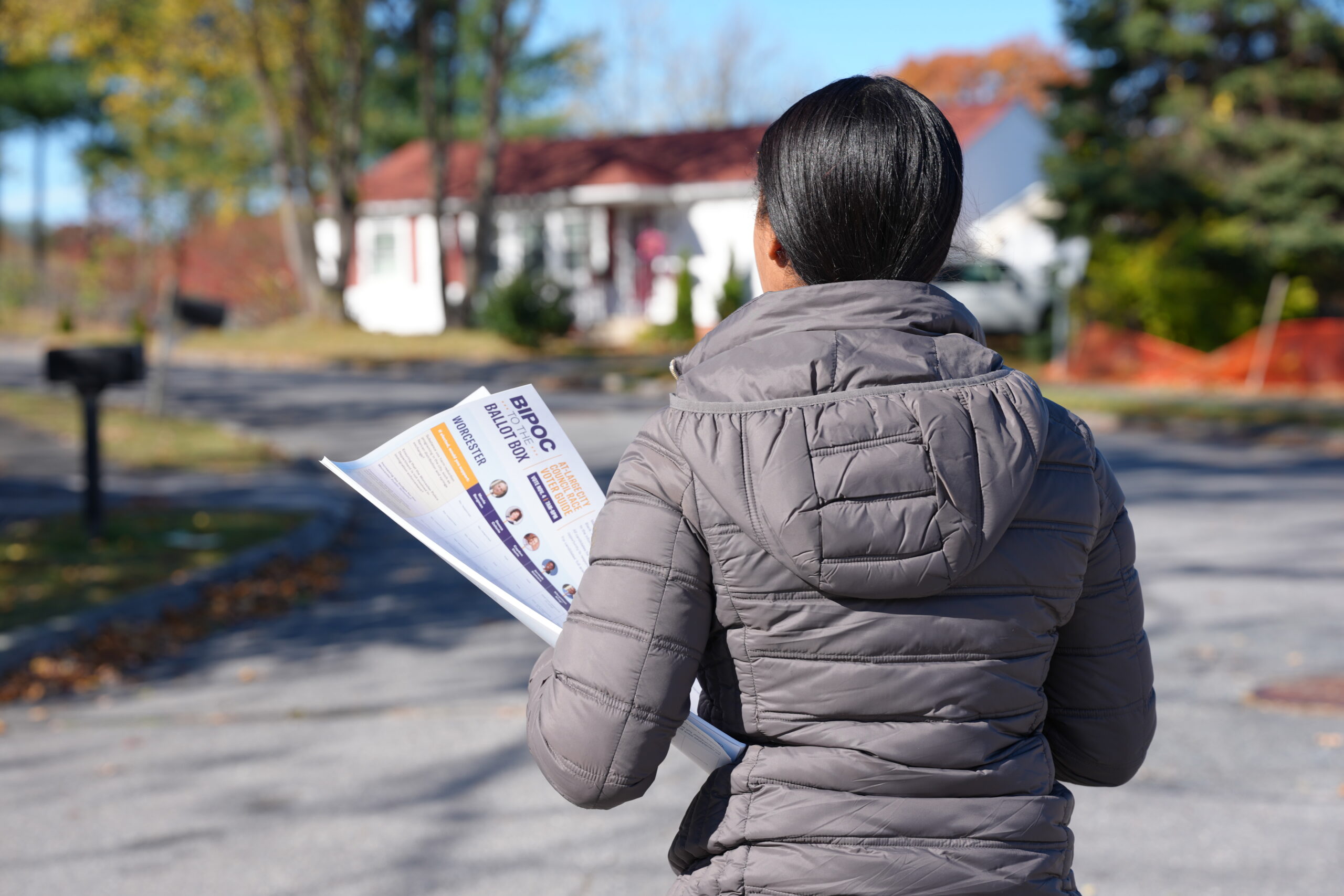
On the positive side, we have seen that persistent and intentional voter outreach can boost turnout. Our BIPOC to the Ballot Box team has knocked on thousands of doors in our majority minority communities to provide civic education and encourage eligible people to vote.
The B2BB campaign, which is currently active in Brockton, Springfield, Worcester, and Lawrence, offers nonpartisan, multi-lingual candidate questionnaires and voter guides to ensure voters are equipped with the information they need to cast ballots for candidates who reflect their beliefs and priorities. We also perform nonpartisan election protection work, encouraging people to vote by mail or visit their polling precincts to cast ballots.
Between the launch of the B2BB campaign in 2023 and the municipal elections in 2025, we saw voter turnout in Lawrence double! This steep increase was in part due to a competitive ballot race. Worcester and Brockton also saw small increases in voter turnout.
Notably, the 2025 Brockton mayoral race led to the first-ever election of a mayor of color, whose immigrant background reflects the diversity of Brockton, one of Massachusetts’ most diverse cities. He won by just 260 votes.
The path forward
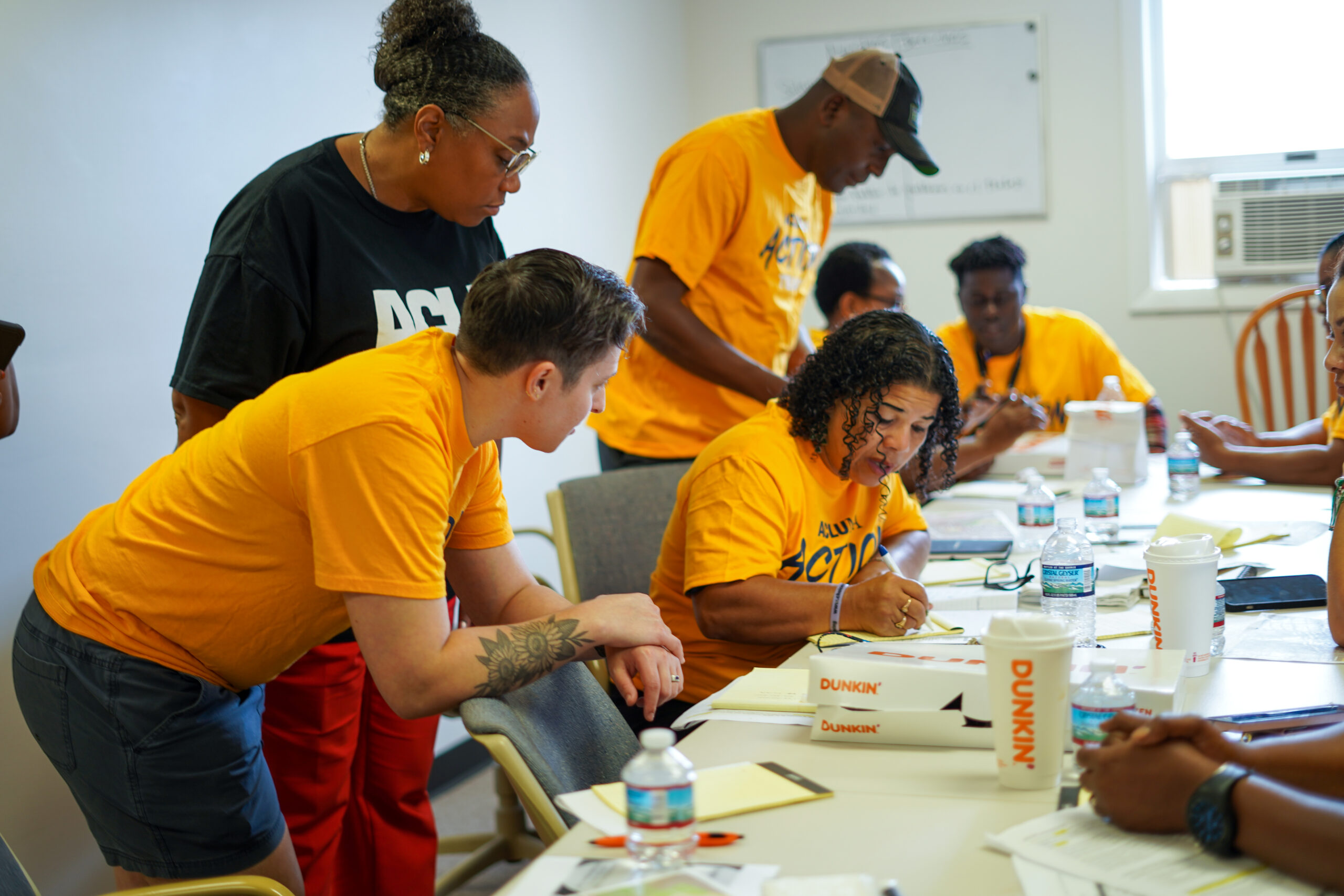
You may be wondering what you can do to stay engaged and activate your civic power. The answer is: Quite a lot!
This Black History Month, let the revolutionary accomplishments of our predecessors be a call to action:
Fill out your household census.
Check that your voter registration is active on the Secretary of the Commonwealth website.
If your status is inactive, follow these guidelines to reactivate your registration.
Read up on ballot questions and make a voting plan.
Talk to your family and friends to make sure they have a plan, too.
Volunteer at a polling place to do nonpartisan election protection work and make sure the venue is accessible for voters with disabilities.
Talk to ACLU canvassers who show up at your door with Know Your Rights materials and nonpartisan voter guides.
Fight federal book bans that would limit knowledge and silence free expression.
And above all, remember how we got here.
We have seen how hard this administration is working to change the historical record to fit an exclusionary agenda. But amid the chaos, some things are clear. For one, celebrating freedom for a select few is not celebrating true freedom at all. And censoring our nation’s past to bury the hard truths will not make us patriots.
As we continue building a democracy that offers freedom, equality, and justice for all, let’s be proud of this patriotic work. It’s worth celebrating.
Traci Griffith
Director, Racial Justice Program
Stay Informed
Sign up to be the first to hear about how to take action.
By completing this form, I agree to receive occasional emails per the terms of the ACLU’s privacy statement.
By completing this form, I agree to receive occasional emails per the terms of the ACLU’s privacy statement.