
ACLU and 75 Organizations Sound Alarm on Meta’s Plan to Add Facial Recognition Technology to Ray-Ban and Oakley Eyeglasses
April 13, 2026 1:00 pm
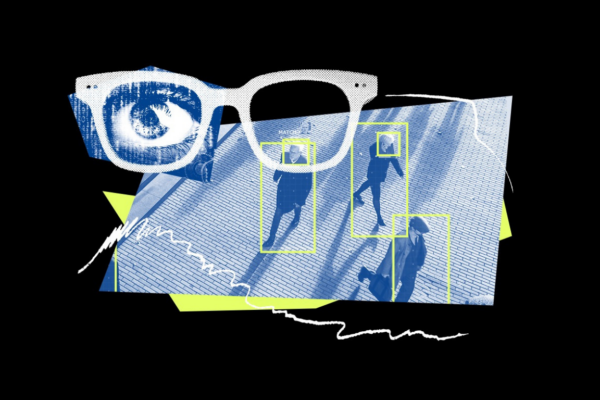
SAN FRANCISCO — Meta’s reported plan to equip its artificial intelligence (AI) eyeglasses with facial recognition technology poses an unacceptable threat to privacy and liberty and is “a red line society must not cross,” a broad coalition of organizations led by the American Civil Liberties Union, the ACLU of Massachusetts, and the New York Civil Liberties Union (NYCLU) warned today in an open letter to Meta CEO Mark Zuckerberg.
The letter was signed by 75 local, state, and national organizations that advocate for domestic violence survivors, worker rights, bodily autonomy, consumer privacy, civil rights, and civil liberties. They called on Meta to immediately halt and publicly disavow plans to equip its Ray-Ban and Oakley glasses with facial recognition.
Glasses equipped with facial recognition technology would allow anyone wearing them to identify by name any strangers in their vicinity — including at protests, medical clinics, and businesses. They could then link that name to digital databases containing a wealth of sensitive information on the target's job, habits, health, and relationships.
“The American people have not consented to this massive invasion of privacy,” said Kade Crockford, director of technology and justice programs at the ACLU of Massachusetts. “Stalkers and scammers would have a field day with this technology. Federal agents could use it to harass and intimidate their critics. It’s dangerous and dystopian, and Meta must disavow it.”
The open letter raises serious concerns about the technology’s impact on vulnerable populations, including people of color, women, children, immigrants, religious minorities, and members of the LGBTQ+ community. Anti-industry activists could use Meta’s glasses to identify and harass corporate executives. Public employees could be identified and harmed because of who they work for, or the political positions taken by their bosses.
By eliminating the expectation of privacy or anonymity in public, Meta’s glasses would chill free expression for everyone. “Preventing this outcome is not just a privacy preference. It is a prerequisite for a free and safe society,” the letter states.
“The principle here is quite simple: Your glasses should not know my name,” said Cody Venzke, senior staff attorney with the ACLU’s Speech, Privacy, and Technology Project. “This is an inherently invasive and unethical technology. The dangers are not hypothetical — they are very real, as we have seen from the deployment of facial recognition in other contexts. Embedding this technology in consumer eyewear would vastly increase the risk of harm to individuals, families, and our democracy itself.”
The coalition letter comes after internal Meta planning documents suggested that the company wanted to launch the glasses during a “dynamic political environment” because civil society groups would be too busy to protest. “That is frankly shameful,” the letter says.
The groups go on to outline their deep concerns about Meta’s ability to safeguard privacy and protect the public from risks introduced by its technologies. In recent years, the company has paid more than $7 billion in settlements and fines for privacy violations.
“Nobody wants to live in a world where strangers can secretly identify them, learn about their activities and interests, record their interactions, and track who they meet or how they exercise their free speech rights,” said Daniel Schwarz, senior privacy and technology strategist at the NYCLU. “Equipping these glasses with facial recognition trained on billions of unsuspecting social media users is not just unconscionable but highly dangerous.”
In parallel with the open letter, the ACLU is urging consumers to write to Meta to express their concern about the technology.
The open letter to Meta, including a list of all signatories, can be found here: https://www.aclum.org/publications/coalition-letter-to-meta-regarding-frt-feature/
Related Content
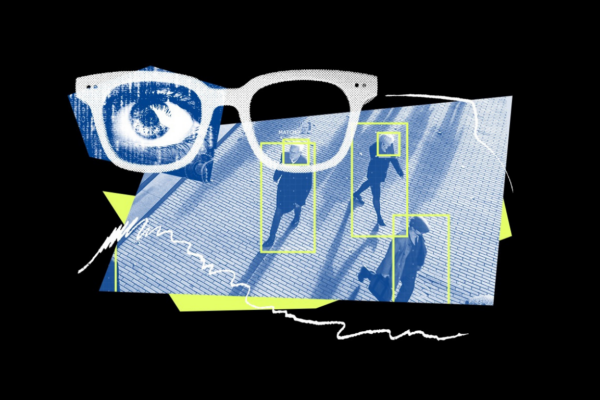
Eyewear, Not Spywear!
Mark Zuckerberg has a dystopian vision for a surveillance society. Here’s how we can fight back.

Data Privacy Now!
Stay Informed
Sign up to be the first to hear about how to take action.
By completing this form, I agree to receive occasional emails per the terms of the ACLU’s privacy statement.
By completing this form, I agree to receive occasional emails per the terms of the ACLU’s privacy statement.