
Court Cases
All Cases
22 Court Cases
Apr 24, 2025
APHA v. NIH
In April 2025, researchers, along with American Public Health Association (APHA), the International Union, United Automobile, Aerospace and Agricultural Implement Workers of America (UAW), and Ibis Reproductive Health, filed a lawsuit challenging the abrupt cancellation of research grants by the National Institutes of Health (NIH), the world’s largest public funder of biomedical research.
The grants were cancelled after NIH staff were directed to eliminate research on disfavored topics and populations without clear guidance or justification – jeopardizing critical medical discoveries that drive advancements in diagnosing, preventing, and treating life-threatening diseases.
In February, the NIH began a reckless purge of federal grants, halting application processes midstream, and stripping funding opportunities from its website. Hundreds of research projects — many of which had been underway for years, representing thousands of hours of work and billions of dollars in investment — were abruptly cancelled without a scientifically valid explanation.
NIH attempted to justify the first wave of its sweeping grant cancellations by vaguely citing connections to “gender identity” or “diversity, equity, and inclusion” (DEI), without defining these terms or explaining how they apply to the terminated research. As a result, critical studies addressing urgent health disparities — designed to develop prioritized strategies for populations at the highest risk of disease — were indiscriminately wiped out. This eradication of research expanded to include research on “vaccine hesitancy,” “COVID,” and any research being conducted or involving labs located in South Africa and China.
This unprecedented purge marks a sharp departure from the NIH’s longstanding approach, in which funding decisions have been guided by congressional mandates, regulatory requirements, and scientific expertise. NIH grants are among the most competitive and rigorously vetted research funding opportunities in the world, undergoing multiple layers of expert review. Most applications submitted are rejected, and until the time of filing, terminations had been exceedingly rare.
Training grants, some of which are designed to facilitate the entry of researchers from historically underrepresented groups into the biomedical field as mandated by Congress, were also canceled, jeopardizing opportunities for the best and the brightest of the next generation of scientists, particularly harming racial and ethnic minorities, women, people from economically disadvantaged backgrounds, and those from rural communities.
The researchers, along with APHA, which has 23,000 public health professional members, UAW, a union of 120,000 workers including graduate students, postdocs, researchers, and faculty in higher education, and Ibis Reproductive Health, a global research organization, are represented by the American Civil Liberties Union, the ACLU of Massachusetts, Protect Democracy, and the Center for Science in the Public Interest. The complaint was filed in the U.S. District Court for the District of Massachusetts against the NIH, NIH Director Jay Bhattacharya, the Department of Health and Human Services (HHS), and HHS Secretary Robert F. Kennedy, Jr.
The lawsuit claims the agency violated the Administrative Procedure Act (APA) by acting arbitrarily and without justification, failing to provide scientific reasoning or follow proper procedures. NIH also exceeded its legal authority by disregarding congressional mandates to fund health disparities research and address the underrepresentation of certain groups in the medical field, and by failing to comply with grant termination regulations. Additionally, the lawsuit argues that NIH’s actions violate the Fifth Amendment’s due process protections by canceling grants based on vague and undefined criteria.
The lawsuit seeks to restore funding to researchers whose grants were unlawfully terminated and to prevent the NIH from continuing to cut awards in this arbitrary and unlawful manner.
Apr 6, 2021

Graham et al. v. District Attorney for Hampden County
The ACLU filed a lawsuit calling for an investigation into Springfield police violence and misconduct, as well as the Hampden County District Attorney’s Office’s failure to investigate and disclose that misconduct.
Oct 16, 2020
Jess v. Summer Hill Estates Condominium Trust
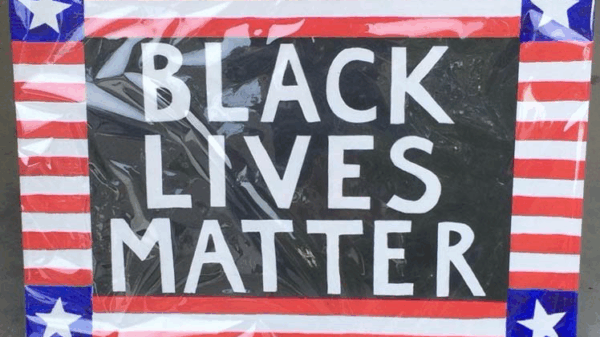
The ACLU of Massachusetts is suing on behalf of a woman in Belchertown who was ordered--unlawfully--by the trustees of her condominium to remove a "Black Lives Matter" sign that she had placed in front of her unit.
Aug 12, 2020

ACLU of Massachusetts v. City of Boston
The ACLU is suing the Boston Police Department for withholding public records.

Feb 2, 2020
Rahim v. Conley
In June 2015, Usaamah Rahim was shot and killed during an encounter with the Boston Police Department and the FBI. Desperate to understand more about the events leading up to her son’s death, Ms. Rahim has filed a public records request.
Jul 10, 2019
ACLU of Massachusetts v. MassDOT
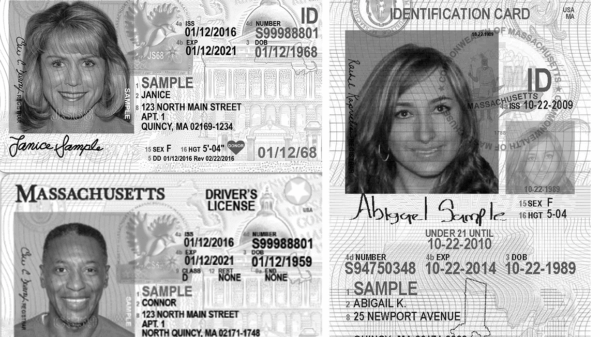
The ACLU is seeking information about the use of face surveillance technology by government agencies in Massachusetts.





Stay Informed
Sign up to be the first to hear about how to take action.
By completing this form, I agree to receive occasional emails per the terms of the ACLU’s privacy statement.
By completing this form, I agree to receive occasional emails per the terms of the ACLU’s privacy statement.