
Mark Zuckerberg has a dystopian vision for a surveillance society. Here’s how we can fight back.
You’re walking down the street when you hear someone call your name. You look up and see a man you’ve never met before, grinning. He asks you if you “still support killing babies” and if you want to say anything to his followers watching online.
You're on the bus, reading the news on your phone, when you notice a group of men laughing and pointing at you. One of them approaches. He tells you you’re pretty and asks if you’d like to go out with him. You say no and turn away. In response, he calls you by name, rattles off your home address and workplace—and warns you not to be so rude to people who are only trying to be nice.
You’re at your daughter’s friend’s birthday party, talking with the other parents, when one of them catches you off guard. She mentions she knows a lot of alumni from your alma mater, and says she’d be happy to make introductions since you’re new in town. You find it strange because you’ve never met this woman before, and you wonder how she knows anything about you.
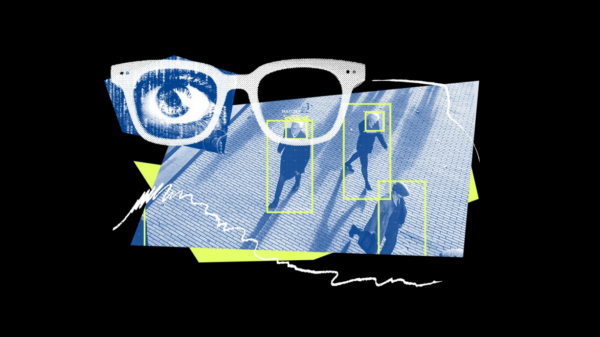
Thankfully, these kinds of unsettling encounters are rare in our society today. But if Mark Zuckerberg’s Meta has its way, they will become our new normal. That’s because, according to an internal company memo leaked to the New York Times earlier this year, the company plans to add facial recognition to its Ray-Ban and Oakley internet-connected glasses.
Meta’s glasses already pose significant privacy and safety risks, enabling those wearing them to secretly record sensitive conversations and encounters. Meta’s plans to add facial recognition to its wearable audio and video recording devices would be a dramatic escalation of that risk.
Turning eyewear into spyware would be a truly dystopian invasion of privacy. Anyone wearing the glasses would be able to covertly identify and pull up the personal information of anyone they see — on the street, in schools, on public transportation, at the doctor’s office, at political protests, at social gatherings, and everywhere else.
Meta has demonstrated it cannot be trusted to manage our data responsibly; in recent years, the company has paid billions in fines and settlements for violating user privacy. Its internal memo about the facial recognition technology, leaked to the New York Times, made clear the company knew it would face a serious backlash and outlined a cynical plan to mute it. Now is a great time for Meta to release this dangerous product, the memo says, because the civil society organizations that would ordinarily fight back are too busy dealing with rising authoritarianism in the United States to do anything about it.
Well, Mark: It turns out we have time, after all.
This week, the ACLU and more than 70 allied organizations sent a letter to Zuckerberg and his partners at Ray-Ban and Oakley’s parent company, EssilorLuxottica, calling on them to abandon their plans to add facial recognition to their glasses. As our letter says, this technology poses unacceptable risks to all of us, but especially to the most vulnerable people in our society and historically marginalized groups.
You can help by contacting Meta directly and delivering the same message yourself.
We and our partners are also hard at work using the power of our democracy to ensure the future of technology works for us, not against us, and that privacy laws are written by us, not for us by out-of-touch billionaires like Mark Zuckerberg.
In Massachusetts, that means partnering with state lawmakers across the political spectrum on consumer data privacy legislation that would prohibit companies like Meta from collecting our biometric data unless it is strictly necessary to provide us with a service we requested. Importantly, this language would block Meta from using facial recognition to identify and track people through their glasses unless they explicitly requested the company to do so. (If you live in Massachusetts, please join our fight for state-level data privacy protections.)
A number of other states already have strong data privacy laws, including Illinois, where individuals have the right to sue companies for violating their biometric privacy rights. In other states, the Attorney General has the power to enforce existing privacy and consumer protection laws; we encourage you to reach out to your AG to ask that they use those authorities to investigate and halt Meta’s plans.
Mark Zuckerberg and his family won’t have to live with the consequences of the technology his company plans to unleash on the world, because he is a billionaire who does not interact with our society in normal ways. But the rest of us cannot take refuge in private planes, private estates, or behind walls enforced by teams of private security. We exist in public, alongside all the other ordinary people trying to make their way in the world.
In part thanks to the power of Big Tech lobbyists, we have no federal privacy law that would prohibit a company like Meta from collecting our biometric data against our will or using it to enable this kind of dystopian surveillance. But that doesn’t mean we have to accept the billionaires’ vision of the future. We retain democratic power to push back—and that’s exactly what the ACLU and our allies are doing.
The good news is that if you join us, we will win.
Kade Crockford is the director of technology and justice programs at the ACLU of Massachusetts.
Related Issues
Related Content

Data Privacy Now!
Stay Informed
Sign up to be the first to hear about how to take action.
By completing this form, I agree to receive occasional emails per the terms of the ACLU’s privacy statement.
By completing this form, I agree to receive occasional emails per the terms of the ACLU’s privacy statement.